YOUR BODY COMPOSITION REPORT
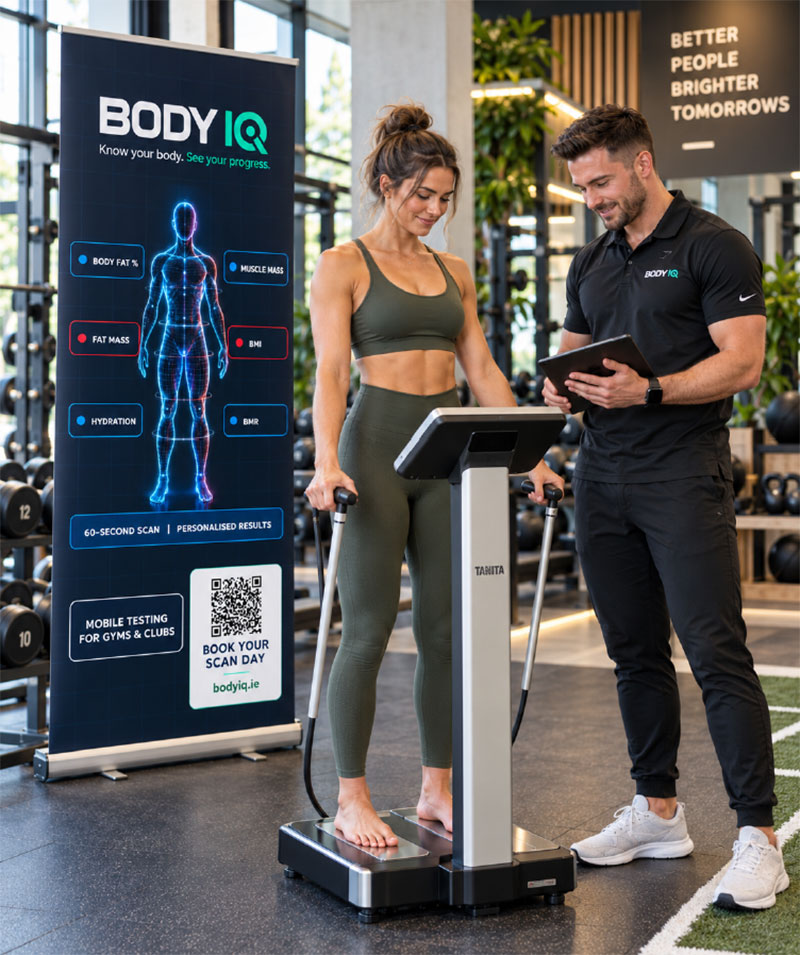
The scales are useful, but they cannot show the whole picture. BODY IQ scanning gives you estimates of the different components of your body weight and, where supported by the final equipment, how muscle and fat are distributed. It is information to help you understand your starting point and observe changes over time.
START WITH THE BIG PICTURE
What you weigh.
The proportion and amount of estimated fat.
Additional context about the non-fat parts of your body.
Use the rest of the report to build a more rounded view — and compare like with like over time.
| Measurement | What it means |
|---|---|
| Body weight (kg) | Your total measured weight. Useful, but a change on the scales does not tell you whether it came from fat, muscle, water or a combination. |
| Body fat (%) | Estimated body fat expressed as a percentage of your total weight. |
| Fat mass (kg) | Estimated body fat expressed in kilograms. |
| Fat-free mass (kg) | Everything other than body fat, including muscle, water, bones and other tissues. It is not the same as muscle mass. |
| Estimated muscle mass (kg) | An estimate of muscle mass. Track under comparable conditions and check the precise label on the scan report. |
| Total body water (kg) | An estimate of water contained in the body. Hydration can affect electrical-impedance results, so testing conditions matter. |
| Body Mass Index (BMI) | Body weight in relation to height. Useful for context but does not distinguish fat from muscle. |
| Basal Metabolic Rate (kcal/day) | Estimated energy required to maintain basic bodily functions at rest; not a personal calorie prescription. |
| Body-fat reference range | A comparison range where supported by the report; this is context rather than a diagnosis or individual target. |
ARMS. LEGS. TRUNK.
A supported segmental scan divides the body into five areas: the left and right arms, the left and right legs, and the trunk. This provides a more detailed estimate of where body fat and lean tissue are distributed. Members can bring this information to their trainer as one more tool for discussing balanced training and longer-term progress.
Estimated body fat percentage, fat mass in kilograms, fat-free mass in kilograms and predicted muscle mass in kilograms for each of the five regions.
Left arm
Right arm
Trunk
Left leg
Right leg
One side may not read exactly the same as the other. That does not automatically indicate a problem. Use the numbers as a baseline, alongside training performance and advice from a qualified coach or health professional.
YOUR NEXT STEP
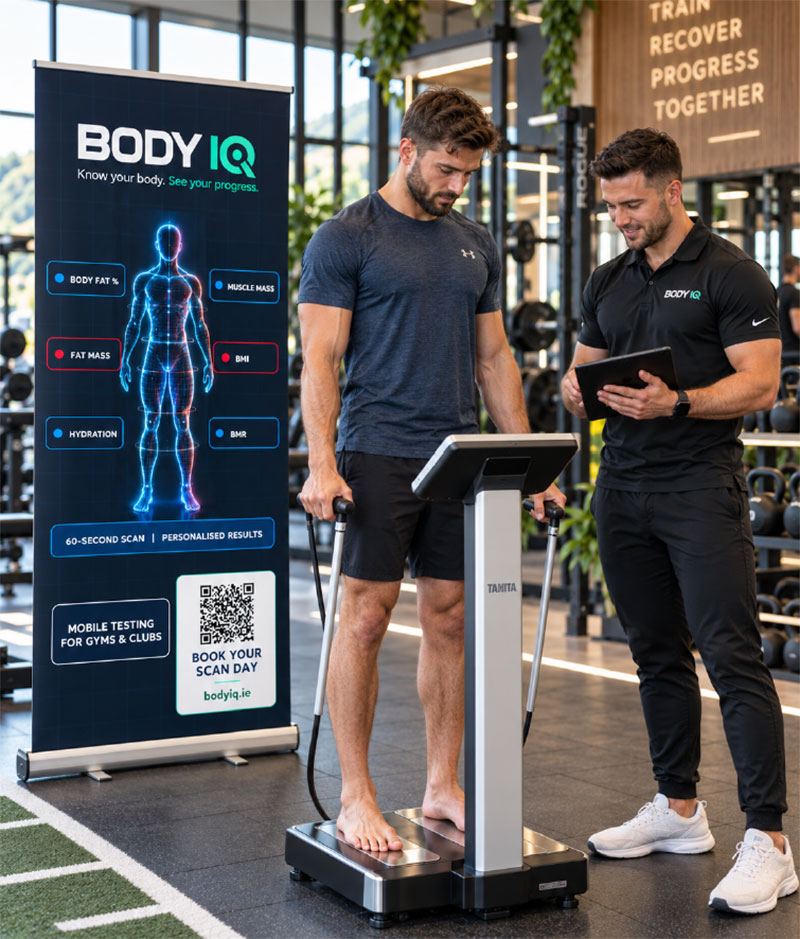
Use your first scan to understand your baseline. If you return for another assessment, aim for similar testing conditions. Trends across several scans are generally more useful than reacting to a small change in a single reading.
Your scan does not replace the training, coaching or everyday habits that matter. It simply gives you another way to understand your progress and decide what to discuss at your next gym check-in.
BODY IQ body-composition estimates are for information and fitness education. They are not a medical diagnosis or assessment of fitness, disease or injury. Results can vary with hydration, food, exercise and other testing conditions. Speak to an appropriate health professional about medical questions.

BODY IQ brings professional body-composition testing to gyms and sports clubs. Know your body. See your progress.
© BODY IQ 2026. All Rights Reserved.